
August Wilson
American playwright known for The Pittsburgh Cycle.

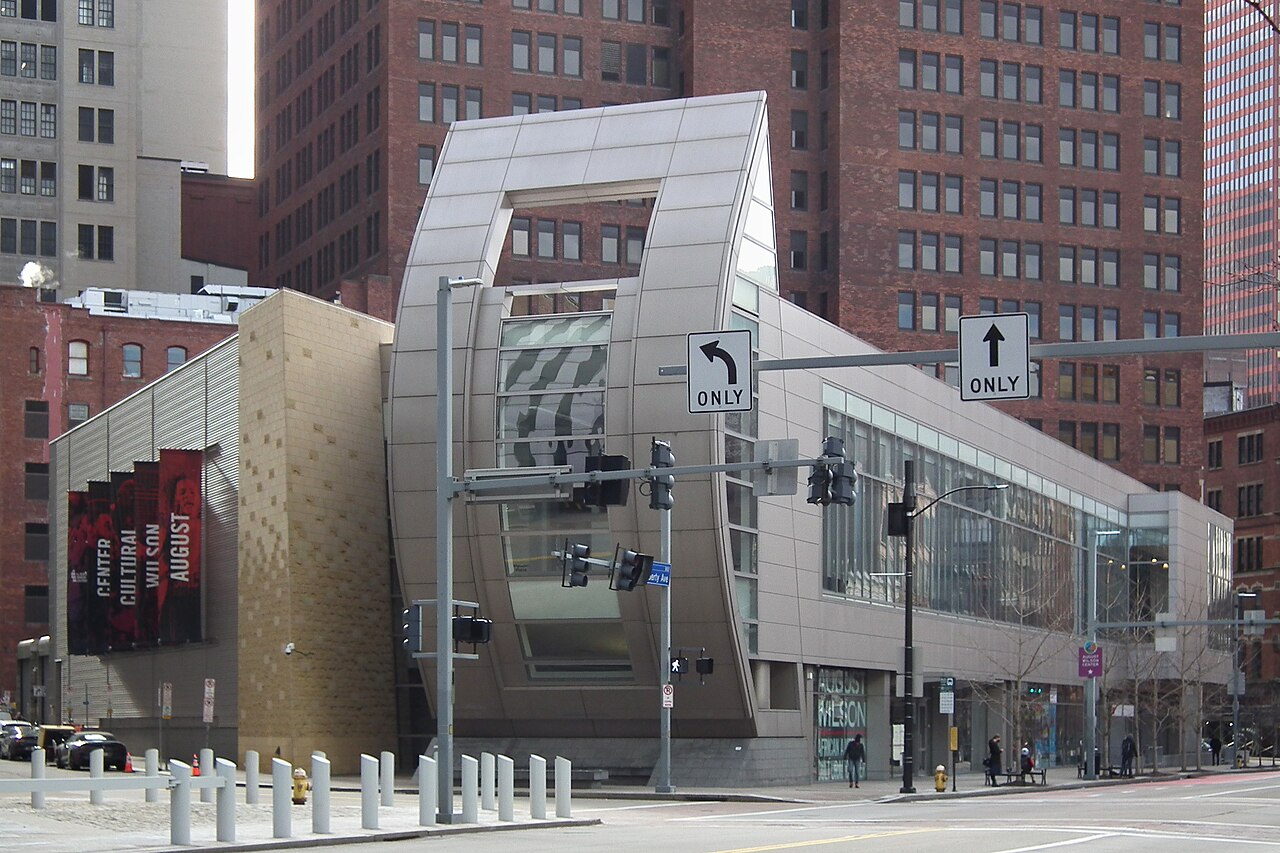
Epicgenius · CC BY-SA 4.0
August Wilson (né Frederick August Kittel Jr.; April 27, 1945 – October 2, 2005) was an American playwright. He has been referred to as the "theater's poet of Black America." He is best known for a series of 10 plays, collectively called The Pittsburgh Cycle (or The Century Cycle), which chronicle the experiences and heritage of the African-American community in the 20th century. Plays in the series include Fences (1987) and The Piano Lesson (1990), each of which won Wilson the Pulitzer Prize for Drama, as well as Ma Rainey's Black Bottom (1984) and Joe Turner's Come and Gone (1988). In 2006, Wilson was inducted into the American Theater Hall of Fame.
- born
- April 27, 1945
- died
- October 2, 2005
- field
- Playwright
- nationality
- American
- known_for
- The Pittsburgh Cycle (10 plays), including Fences and The Piano Lesson, each win
Verified Timeline
Lore & Background
August Wilson was born Frederick August Kittel Jr. in the Hill District of Pittsburgh, Pennsylvania, the fourth of six children. His father, Frederick August Kittel Sr., was a Sudeten German immigrant who worked as a baker/pastry cook. His mother, Daisy Wilson, was an African-American woman from North Carolina who cleaned homes for a living. Wilson's mother raised the children alone until he was five in a two-room apartment behind a grocery store at 1727 Bedford Avenue; his father was mostly absent. Wilson later wrote under his mother's surname. The economically depressed neighborhood where he was raised was inhabited predominantly by Black Americans and Jewish and Italian immigrants. Wilson struggled with finding a sense of belonging to a particular culture and did not feel that he truly fit into African-American culture or White culture until later in life. After his mother divorced and married David Bedford in the 1950s, the family moved to the then predominantly White working-class neighborhood of Hazelwood, where they encountered racial hostility—bricks were thrown through a window at their new home—and were soon forced out. Raised Catholic, in 1959 Wilson was one of 14 African-American students at Central Catholic High School but dropped out after one year. He dropped out of Gladstone High School in the 10th grade in 1960 after his teacher accused him of plagiarizing a 20-page paper he wrote on Napoleon I of France. At 16 he began working menial jobs, where he met a wide variety of people on whom some of his later characters were based, such as Sam in The Janitor (1985). Wilson educated himself at the Carnegie Library of Pittsburgh, reading Black writers including Ralph Ellison, Richard Wright, Langston Hughes, and Arna Bontemps. In 1965, after his father's death, he changed his name to August Wilson to honor his mother. That same year, he discovered the blues as sung by Bessie Smith and bought a stolen typewriter for $10, which he often pawned when money was tight. He began writing poetry and later plays, often writing in bars and cafes on napkins and yellow notepads. In 1968, along with his friend Rob Penny, he co-founded the Black Horizon Theater in the Hill District of Pittsburgh. His first play, Recycling, was performed for audiences in small theaters, schools and public housing community centers for 50 cents a ticket. In 1978, Wilson moved to Saint Paul, Minnesota, at the suggestion of his friend, director Claude Purdy, who helped him secure a job writing educational scripts for the Science Museum of Minnesota. In 1980, he received a fellowship for The Playwrights' Center in Minneapolis. He quit the museum in 1981 but continued writing plays. For three years, he was a part-time cook for the Little Brothers of the Poor. In 1990, after getting divorced, Wilson left St. Paul and moved to Seattle, where he developed a relationship with Seattle Repertory Theatre, which produced his entire 10-play cycle and his one-man show How I Learned What I Learned.
Reader's Guide
August Wilson's significance lies in his 10-play cycle, The Pittsburgh Cycle (or The Century Cycle), which chronicles the experiences and heritage of the African-American community in the 20th century. Plays in the series include Fences (1987) and The Piano Lesson (1990), each of which won Wilson the Pulitzer Prize for Drama, as well as Ma Rainey's Black Bottom (1984) and Joe Turner's Come and Gone (1988). Other themes range from the systemic and historical exploitation of African Americans, race relations, identity, migration, and racial discrimination. Viola Davis said that Wilson's writing "captures our humor, our vulnerabilities, our tragedies, our trauma. And he humanizes us. And he allows us to talk." Since Wilson's death, three of his plays have been adapted or re-adapted into films: Fences (2016), Ma Rainey's Black Bottom (2020) and The Piano Lesson (2024). Denzel Washington has shepherded the films and has vowed to continue Wilson's legacy by adapting the rest of his plays into films for a wider audience. Washington said, "the greatest part of what's left of my career is making sure that August is taken care of." In 2006, Wilson was inducted into the American Theater Hall of Fame. Wilson insisted that a Black director be hired for the film adaptation of Fences, saying: "I declined a White director not on the basis of race but on the basis of culture. White directors are not qualified for the job. The job requires someone who shares the specifics of the culture of Black Americans." The film remained unmade until 2016, when Denzel Washington directed the film Fences, starring Washington and Viola Davis; it earned Wilson a posthumous Oscar nomination. Wilson received many honorary degrees, including an honorary Doctor of Humanities from the University of Pittsburgh, of which he was a trustee from 1992 until 1995.
Did You Know?
- Wilson learned to read at age four and began reading Black writers at the Carnegie Library of Pittsburgh when he was 12.
- He dropped out of high school in the 10th grade after a teacher accused him of plagiarizing a 20-page paper on Napoleon I of France.
- In 1965, he bought a stolen typewriter for $10, which he often pawned when money was tight.
- Wilson's first play, Recycling, was performed for audiences at 50 cents a ticket in small theaters, schools, and public housing community centers.
- In 1987, St. Paul's mayor George Latimer named May 27 'August Wilson Day' because Wilson is the only person from Minnesota to win a Pulitzer Prize for Drama.
A Playwright's Home in Hell's Kitchen
August Wilson's name appears in the alumni roster of New Dramatists, the playwrights' organization that has called 424 West 44th Street home since 1949. Central to the organization's mission is a seven-year residency program designed to nurture playwrights' skills and careers. Wilson's membership in this alumni family places him within a tradition of sustained artistic development that the organization has championed for decades.
The Gothic Revival Sanctuary
The structure that housed New Dramatists during the years Wilson was part of its community carries a history far older than the playwrights who would inhabit it. The organization maintains a library within these walls, open to the public on weekdays—a resource that would have been available to any playwright in the building, including Wilson. The transformation of a sacred Gothic space into a secular workshop for storytelling speaks to the deep cultural resonance the organization sought to cultivate. For a resident playwright working through a seven-year development period, the very architecture of the building—its pointed arches, its historical layers—would have formed a constant backdrop to the creative labor of writing for the stage.
A Web of Prizes and Patronage
During the period Wilson was connected to New Dramatists, the organization administered a constellation of awards that shaped the American theatrical landscape. Together, these prizes created an ecosystem of recognition and support that alumni like Wilson would have known well.
Among the Company
Wilson's name sits in a remarkable lineup of New Dramatists alumni, a roster that reads like a who's-who of twentieth-century American playwriting. The organization's culture extended beyond the writing room: it hosted workshops for young authors and held an annual luncheon where actors and producers who had made significant contributions to American theatre were publicly honored. For Wilson, being part of this alumni community meant belonging to a lineage of dramatists who had shaped the American stage across generations.
Gallery


Frequently Asked Questions
Who is August Wilson?
August Wilson (1945–2005) was an American playwright widely regarded as one of the most significant dramatists of the 20th century. He is best known for a ten-play series that traces African-American life across each decade of the 1900s.
What is The Pittsburgh Cycle?
The Pittsburgh Cycle, sometimes called The Century Cycle, is August Wilson's collection of ten plays that follow the experiences and heritage of Black Americans through every decade of the 20th century. The works are largely set in Pittsburgh, Pennsylvania.
Which August Wilson plays won the Pulitzer Prize for Drama?
Fences (1987) and The Piano Lesson (1988) are the two plays from his cycle that received the Pulitzer Prize for Drama. Both are frequently performed and are considered cornerstone works of American theater.
What was August Wilson's birth name?
He was born Frederick August Kittel Jr. on April 27, 1945. He later took the name August Wilson, shedding his biological father's surname.
Why is August Wilson considered important to American theater?
He is often called 'the theater's poet of Black America' because his body of work offers a sweeping, decade-by-decade portrait of the African-American experience. His critical acclaim, including multiple Pulitzers, cemented his legacy as a defining voice on the American stage.
More in Dramatists & Playwrights 1-21
Spotted an error? Know more?
This is a living reference — every entry is fact-audited, and reader corrections feed straight into our audit queue. Suggest an edit · See this site's audit record