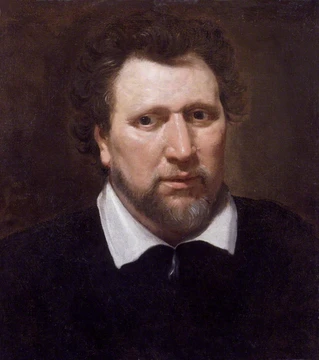
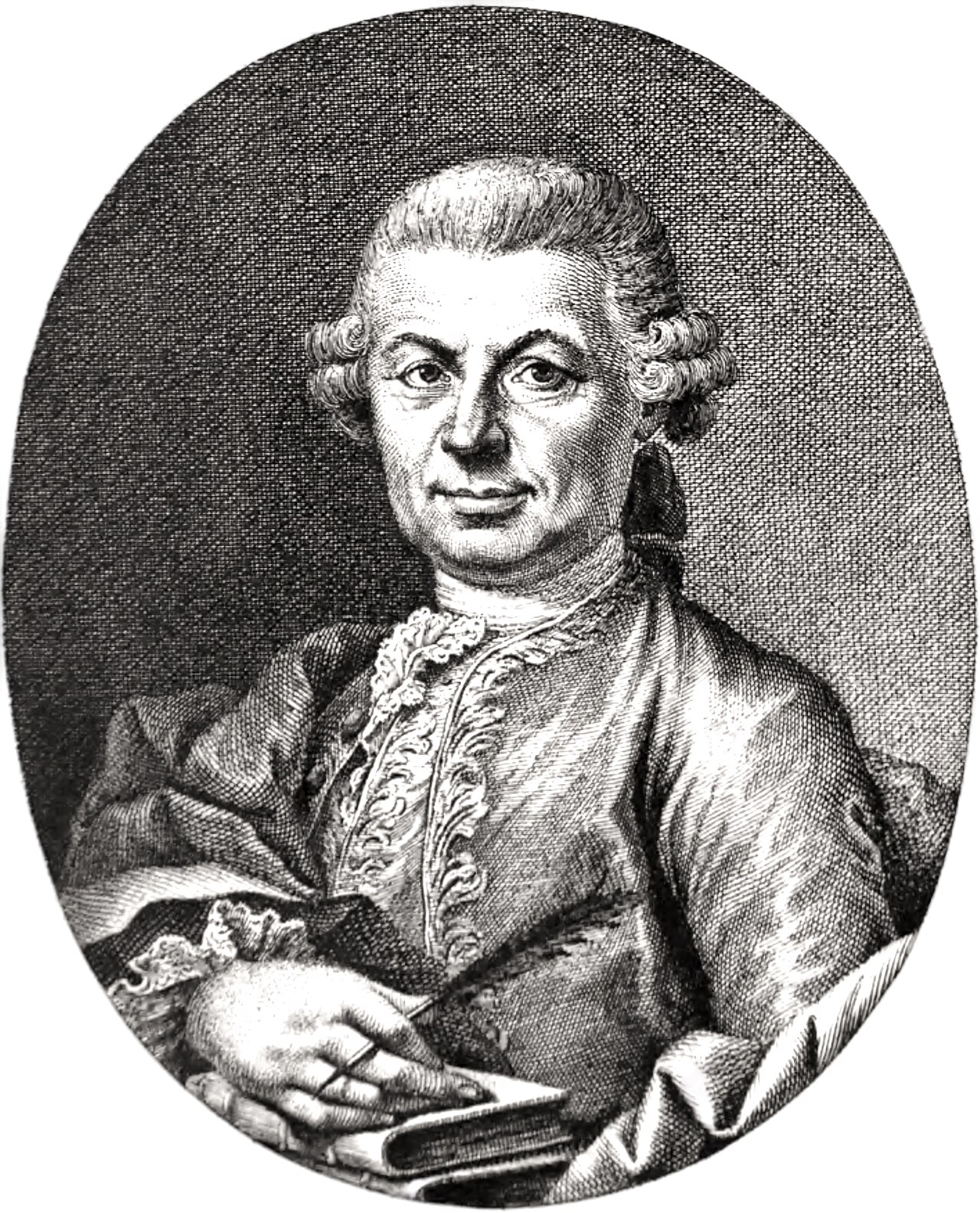
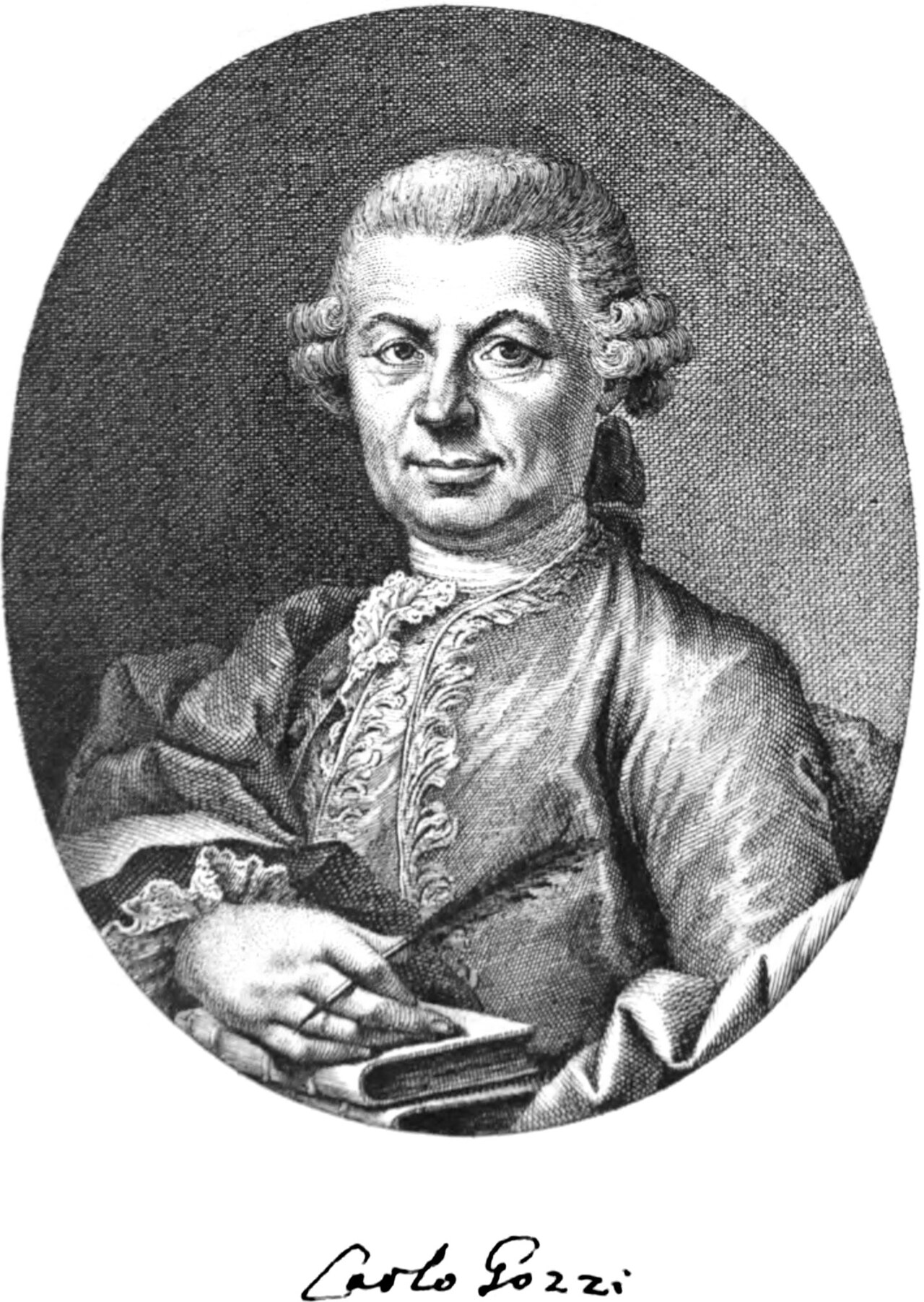
Carlo Gozzi
Venetian playwright who revived Commedia dell'arte through fairy-tale plays.

Unknown engraver · CC BY 1.0
Carlo, Count Gozzi (13 December 1720 – 4 April 1806) was an Italian (Venetian) playwright and champion of Commedia dell'arte. He came from a family of minor Venetian aristocracy, the Tiepolos, and was born and died in Venice. After his parents could no longer support him, he joined the army in Dalmatia for three years before returning to Venice and joining the Granelleschi Society, which was dedicated to preserving Tuscan literature from foreign influence and handing down traditional Italian comedic performance: the Commedia dell'arte.
- born
- 13 December 1720
- died
- 4 April 1806
- field
- Playwright
- nationality
- Italian (Venetian)
- known_for
- Champion of Commedia dell'arte; author of fairy-tale plays such as The Love for
Lore & Background
Carlo Gozzi defended Commedia dell'arte against the innovations of Pietro Chiari and Carlo Goldoni, who were moving away from the old style of Italian theatre. In 1757 he published a satirical poem, *La tartana degli influssi per l'anno 1756*, and in 1761 he parodied Chiari and Goldoni in his comedy *The Love for Three Oranges* (full title: *Analisi riflessiva della fiaba L'amore delle tre melarance*). He engaged the Sacchi company of players, a Commedia dell'arte troupe whose engagements had dwindled because of Chiari and Goldoni's efforts. Their acting was informed by personal vendetta, making the play an extraordinary success. Gozzi donated his play and the rest of his fairy tales to Sacchi's troupe, in effect saving the company. His efforts were anachronistic, since Gozzi wrote out all his scripts, whereas traditional Commedia dell'arte was always improvised. Struck by the effect of the supernatural or mythical element on the audience, Gozzi produced a series of dramatic pieces based on fairy tales. These were hugely popular, but after Sacchi's company disbanded, they were unjustly neglected. His fairy tales drew influence from Commedia dell'arte and caused a revival of the genre in Italy. They were praised by Goethe, the Schlegel brothers, Hoffmann, Madame de Staël, Sismondi, and Ostrovsky. One of them, *Turandot* (or *La Turandotte*), was translated by Friedrich Schiller and staged by Goethe in Weimar in 1802 with great success. Gozzi was acclaimed throughout most of Europe but was less esteemed in his own homeland. In his last years, Gozzi experimented with producing tragedies with largely comical influences, but these were met with harsh critical response. He then worked in Spanish drama and found minor success before his death. He was buried in the church of San Cassiano in Venice. His collected works were published under his own superintendence at Venice in 1792, in 10 volumes. He shares his tomb with his brother Gasparo Gozzi at the San Michele cemetery on the Isola di San Michele.
Reader's Guide
Carlo Gozzi's significance lies in his vigorous defense and revival of Commedia dell'arte during a period when it was being supplanted by more modern theatrical forms. By writing fully scripted fairy-tale plays—such as *The Love for Three Oranges* (1761), *The Raven* (1761), *The King Stag* (1762), *Turandot* (1762), *The Serpent Woman* (1762), and *The Green Bird* (1765)—he preserved the spirit of the improvisational tradition while adapting it for a changing audience. His works not only saved the Sacchi troupe from financial ruin but also sparked a renewed interest in Commedia dell'arte across Italy. Gozzi's legacy extends far beyond his own time: his fairy tales inspired major figures of the Romantic era, including Goethe, the Schlegel brothers, and Hoffmann, and later served as the basis for numerous twentieth-century stage works and operas, including Sergei Prokofiev's *The Love of Three Oranges*, Ferruccio Busoni's and Giacomo Puccini's operas based on *Turandot*, Alfredo Casella's *La donna serpente*, and Hans Werner Henze's *König Hirsch*. Despite being less esteemed in his native Venice, his influence on European theatre and opera is enduring.
Did You Know?
- Gozzi's fairy-tale play *Turandot* was translated by Friedrich Schiller and staged by Goethe in Weimar in 1802 with great success.
- Gozzi donated his play *The Love for Three Oranges* and the rest of his fairy tales to the Sacchi troupe, in effect saving the company from financial ruin.
- Gozzi wrote out all his scripts, which was anachronistic because traditional Commedia dell'arte was always improvised.
- Gozzi's feuds with Carlo Goldoni and Pietro Chiari between 1756 and 1762 were legion, centered on the changing style of Italian theatre.
- A number of twentieth-century stage works were inspired by Gozzi's plays, including Sergei Prokofiev's *The Love of Three Oranges* and Giacomo Puccini's *Turandot*.
The Battle for Commedia dell'Arte
Carlo Gozzi's most defining professional commitment was the preservation of Commedia dell'arte, a tradition he saw under existential threat from two fellow Venetian writers, Pietro Chiari and Carlo Goldoni, who were steering Italian theatre toward a new style. Gozzi had joined the Granelleschi Society, a group dedicated to safeguarding Tuscan literary heritage and traditional comedic performance from foreign cultural influence. In 1757, he published a satirical poem, La tartana degli influssi per l'anno 1756, as a direct defense of the old form. By 1761, his fairy-tale comedy The Love for Three Oranges served as both a parody of Chiari and Goldoni and a showcase for the Sacchi company, a Commedia dell'arte troupe struggling with dwindling engagements. Gozzi donated the play and his remaining fairy tales to the company, effectively rescuing them from dissolution. Yet his approach was fundamentally anachronistic: unlike the improvised tradition he championed, Gozzi wrote out every line of his scripts, making his advocacy a paradox of preservation through rigid authorship.
The Fairy Tale Revolution
Gozzi's most celebrated creative breakthrough came almost accidentally. While using supernatural and mythical elements merely as vehicles for satirical commentary, he was struck by the powerful effect they produced on audiences. This revelation sent him down a path of writing an entire series of dramatic pieces based on fairy tales, collectively known as Fiabe Teatrali. Works such as The Love of Three Oranges, The Raven, The King Stag, Turandot, The Serpent Woman, and The Blue Monster drew their structural and performative DNA directly from Commedia dell'arte. Their popularity was enormous, and their success triggered a genuine revival of Commedia dell'arte across Italy. European literary luminaries including Goethe, the Schlegel brothers, Hoffmann, Madame de Staël, Sismondi, and Ostrovsky all praised these tales. In 1802, Goethe staged a Schiller translation of Turandot in Weimar to great acclaim. Yet after the Sacchi company disbanded, the fairy tales were unjustly neglected, and Gozzi, though acclaimed throughout much of Europe, remained less esteemed in his own Italian homeland.
A Legacy That Outlived the Author
Gozzi's influence on subsequent European art proves far more durable than his reputation in Venice. His collected works, published under his own supervision in ten volumes in 1792, laid the groundwork for a long chain of creative reinterpretation. In the twentieth century, his plays inspired stage treatments by Karl Vollmöller and Bertolt Brecht, operas by Ferruccio Busoni and Giacomo Puccini (both drawing on Turandot), Sergei Prokofiev's The Love of Three Oranges, Alfredo Casella's La donna serpente, and Hans Werner Henze's König Hirsch. In his final years, Gozzi experimented with tragedies infused with comical elements, only to face harsh critical rejection, before turning to Spanish drama, where he found modest success before his death on 4 April 1806. He was initially buried in the church of San Cassiano in Venice, and today shares a tomb with his brother, the writer Gasparo Gozzi, at the San Michele cemetery on the Isola di San Michele.
Venetian Society and Personal Feuds
Born into the minor Venetian aristocracy as a member of the Tiepolo family on 13 December 1720, Gozzi's early life was marked by financial hardship. When his parents could no longer support him, he enlisted in the army in Dalmatia, returning to Venice three years later. His personal life was entangled with the social currents of the Republic. He served as the titular protector of the actress Teodora Ricci, and when the Venetian socialite Pier Antonio Gratarol — a figure partially reflected in Gozzi's play Draghe d'Amore — pursued an affair with her, Gozzi played a role in securing Gratarol's exile. His most bitter rivalries, however, were literary: the feuds with Goldoni and Chiari between 1756 and 1762 were numerous and fierce, rooted in fundamentally opposing visions of where Italian theatre should go. His brother Gasparo was himself a writer, and the two men shared both a name and a literary vocation.
Gallery


Frequently Asked Questions
Who is Carlo Gozzi?
Carlo Gozzi was an 18th-century Venetian count who became Italy's most passionate advocate for Commedia dell'arte. He is best remembered for writing fantastical fairy-tale stage plays that revitalized the traditional Italian comedic performance style.
What are Carlo Gozzi's most famous works?
His signature plays include The Love for Three Oranges and Turandot, both whimsical fairy-tale comedies built on Commedia dell'arte conventions. These works are considered his greatest contributions to the Italian theatrical canon.
Why is Carlo Gozzi important in theater history?
He stepped in to defend and revive Commedia dell'arte at a time when the tradition was losing popularity, using imaginative fairy-tale plots to reinvigorate it. His efforts left a lasting imprint on European drama and performance culture.
How did Carlo Gozzi influence later opera and literature?
His theatrical fairy tales, especially Turandot, served as direct source material for later European writers and composers. Puccini's celebrated opera Turandot is one of the most prominent examples of his work being adapted into another art form.
When was Carlo Gozzi born and when did he die?
He was born in Venice on 13 December 1720 and died on 4 April 1806. He lived through the full 18th century, dedicating his adult life to playwriting and theatrical advocacy.
More in Dramatists & Playwrights 1-21
Spotted an error? Know more?
This is a living reference — every entry is fact-audited, and reader corrections feed straight into our audit queue. Suggest an edit · See this site's audit record