Brendan Behan
Irish writer and Republican whose work drew on prison experiences.

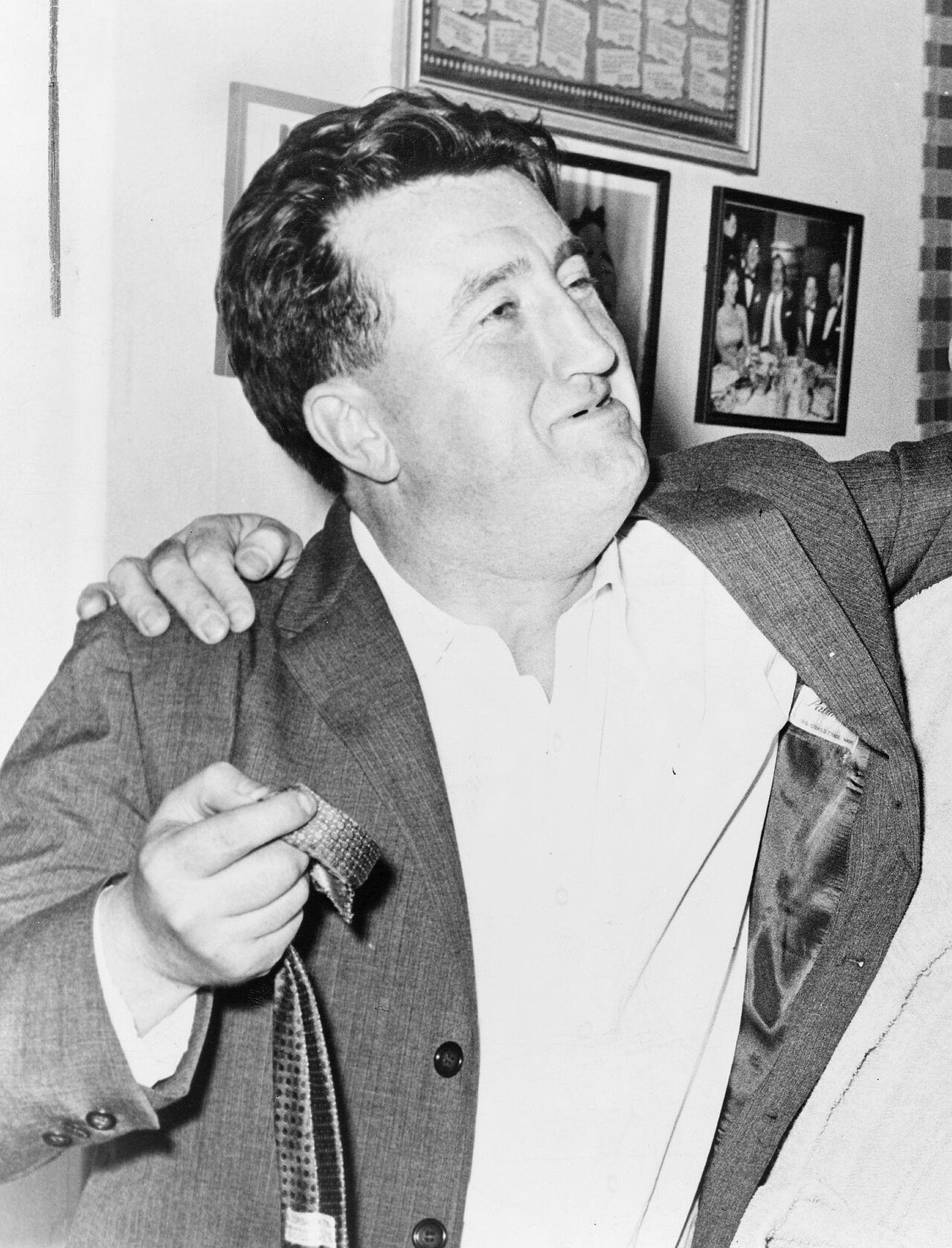
New York World-Telegram and the Sun staff photographer: Albertin, Walter, photog · Public domain
Brendan Francis Aidan Behan (christened Francis Behan; 9 February 1923 – 20 March 1964) was an Irish poet, short story writer, novelist, playwright, and Irish Republican activist who wrote in both English and Irish. His widely acknowledged alcohol dependence, despite attempts to treat it, impacted his creative capacities and contributed to health and social problems that curtailed his artistic output and finally his life. He is widely regarded as one of Ireland's greatest writers.
- born
- 9 February 1923, Dublin, Ireland
- died
- 20 March 1964
- field
- Poetry, short stories, novels, plays
- nationality
- Irish
- known_for
- Borstal Boy, The Quare Fellow, The Hostage, Irish Republican activism
Verified Timeline
Lore & Background
Behan was born in Dublin into a staunchly republican family, becoming a member of the IRA's youth organization Fianna Éireann at age fourteen. At sixteen he joined the IRA and was arrested in England for an unauthorized solo bombing mission at Cammell Laird shipyard, serving three years in a borstal youth prison. During this time he studied and became a fluent speaker of Irish. After release in 1946 under a general amnesty given by the Fianna Fáil government, he moved between homes in Dublin, Kerry, and Connemara, and also resided in Paris for a time. His first play, The Quare Fellow, was produced in Dublin in 1954 and gained wider reputation with a 1956 production at Joan Littlewood's Theatre Workshop in Stratford, London, helped by a famous drunken interview on BBC television with Malcolm Muggeridge. In 1958 his Irish-language play An Giall debuted at Dublin's Damer Theatre; its English adaptation The Hostage achieved international success. His autobiographical novel Borstal Boy, published the same year, became a worldwide best-seller. By the early 1960s Behan reached the peak of his fame, spending increasing time in New York City and famously declaring, 'To America, my new found land: The man that hates you hates the human race.' He associated with prominent figures such as Harpo Marx and Arthur Miller and was followed by a young Bob Dylan. However, his alcohol dependence and diabetic conditions continued to deteriorate. Later works Brendan Behan's New York and Confessions of an Irish Rebel received little praise. He briefly attempted sobriety while staying at the Chelsea Hotel in New York, and in 1961 was admitted to Sunnyside Private Hospital in Toronto for treatment of alcohol dependence, but relapsed back into active alcohol use.
Reader's Guide
Brendan Behan's significance lies in his fusion of Irish Republican experience with literary achievement, producing works that drew directly from his prison years and political activism. His plays The Quare Fellow and The Hostage brought Irish working-class and republican perspectives to international stages, while Borstal Boy remains a classic prison memoir. Behan's bilingual writing in English and Irish reflects his deep engagement with Irish language and culture, nurtured by a family that included his uncle Peadar Kearney, who wrote 'The Soldier's Song' which became the Irish national anthem Amhrán na bhFiann. His alcohol dependence, however, severely limited his output and contributed to his early death at age 41. Despite this, his reputation as one of Ireland's greatest writers endures, and his works continue to be studied for their raw portrayal of confinement, rebellion, and Irish identity. His legacy also includes influencing later Irish writers and contributing to the global image of the Irish literary tradition.
Did You Know?
- Behan wrote a lament to Michael Collins called 'The Laughing Boy' at age thirteen, the title taken from the affectionate nickname Collins had been given by Behan's mother.
- His uncle Peadar Kearney wrote 'The Soldier's Song', which became the Irish national anthem Amhrán na bhFiann when translated into Irish.
- At age eight, a passer-by mistook a drunk Brendan for being deformed; his granny joked, 'He's not deformed; he's just drunk!'
- Behan was sentenced to 14 years' imprisonment in 1942 for conspiracy to murder and attempted murder of two Garda detectives, after firing two shots at police.
- In 2024, Dublin playwright Jimmy Murphy discovered act 1 of Behan's lost first play The Rent Woman in the National Library of Ireland archives, alongside handwritten acts 2 and 3 of its Irish-language version An Bean Ciósa.
A Dublin Household Steeped in Letters and Politics
Behan entered the world on 9 February 1923 at Holles Street Hospital in Dublin's inner city, into an educated working-class household where literature and republicanism were inseparable. His father Stephen, a house painter and War of Independence veteran, read the children Zola, Galsworthy, and Maupassant at bedtime, while his mother Kathleen—a lifelong political activist and personal friend of Michael Collins—guided them through literary tours of the city. The family's cultural roots ran deep: his uncle Peadar Kearney had written "The Soldier's Song," which became Ireland's national anthem, and by thirteen Brendan had already composed a lament to Collins titled "The Laughing Boy," after the nickname his mother used for the leader. In 1937 the family moved to a local council housing scheme on Kildare Road in Crumlin, a relocation Stephen bitterly quipped was sending the working classes "To Hell or to Kimmage." That same year, thirteen-year-old Brendan left school to apprentice as a house painter, following his father and both grandfathers into the trade.
From Fianna Éireann to the Borstal
Behan's political path began at fourteen when he joined Fianna Éireann, the youth organization of the Anti-Treaty IRA. He published his earliest poems and prose in the group's magazine, Fianna: the Voice of Young Ireland, and in 1931 became the youngest contributor ever printed in The Irish Press, with a poem called "Reply of Young Boy to Pro-English verses." At sixteen he joined the IRA proper and launched an unauthorized solo mission to England, intending to set off a bomb at the Cammell Laird shipyard. He was arrested in possession of explosives. British prosecutors tried to turn him into an informant against his IRA superiors, offering to relocate him under a new name to Canada or another distant Commonwealth territory. The teenager refused. He was sentenced to three years at Hollesley Bay borstal, a youth prison in the United Kingdom, and did not return to Ireland until 1941. During his confinement he taught himself fluent Irish. Back home, he was arrested twice in 1942 under de Valera's wartime emergency—once after a protest against the execution of IRA man George Plant, and again at a commemoration. He was ultimately freed under a general amnesty granted by the Fianna Fáil government in 1946.
From Dublin Stages to a Global Audience
Behan's theatrical career ignited in 1954 when his first play, The Quare Fellow, opened in Dublin to a warm reception. It was the 1956 production at Joan Littlewood's Theatre Workshop in Stratford, London, that gave him a far wider audience. His public persona was further shaped by a now-legendary drunken television interview with Malcolm Muggeridge on the BBC, in which his unfiltered wit became inseparable from his name. In 1958 his Irish-language play An Giall premiered at Dublin's Damer Theatre, and its English-language adaptation, The Hostage, went on to earn significant international success. That same year brought another milestone: the publication of his autobiographical novel Borstal Boy, which became a worldwide best-seller and carried his years of imprisonment and political conviction to a global readership. By the early 1960s Behan had reached the height of his public profile, spending growing amounts of time in New York City, where he famously declared, "To America, my new found land: The man that hates you hates the human race." His social circle included Harpo Marx, Arthur Miller, and a young Bob Dylan, who trailed him through the city's artistic scenes.
The Weight of Fame and the Long Relapse
The very fame that carried Behan into New York's salons did little to halt the erosion of his health and creative output. His alcohol dependence, a persistent shadow over his work, continued to worsen alongside a diabetic condition that compounded his physical decline. His later books—Brendan Behan's New York and Confessions of an Irish Rebel—drew little critical praise, a sharp contrast to the acclaim of Borstal Boy and The Hostage. In an effort to reclaim his body and his writing, he attempted a stretch of sobriety while staying at the Chelsea Hotel in New York. The effort proved unsustainable. In 1961 he was admitted to Sunnyside Private Hospital in Toronto, an institution devoted to treating alcohol dependence, but he relapsed and returned to active drinking. The cycle of treatment and relapse repeated, and his capacity for sustained creative work steadily eroded. Behan's life, which had begun in a Dublin household saturated with ballads and revolutionary politics, ended on 20 March 1964, at the age of forty-one, a victim of the dependencies that had haunted him since his youth.
Gallery
Frequently Asked Questions
Who is Brendan Behan?
Brendan Behan (1923–1964) was an Irish poet, novelist, short-story writer, and playwright born in Dublin who also served as an active Irish Republican. He is widely considered one of the most significant literary voices in Ireland's history.
What are Brendan Behan's most famous plays?
His two best-known stage works are The Quare Fellow and The Hostage, both of which draw heavily on his personal experiences with imprisonment and the Irish Republican cause. These comedies remain staples of Irish theatre repertoires.
How did Brendan Behan's alcoholism affect his career and life?
His well-documented dependence on alcohol repeatedly disrupted his creative output and led to serious health and social problems. Despite treatment attempts, it ultimately contributed to his death at the age of forty-one in March 1964.
What is Brendan Behan's connection to Irish Republicanism?
Behan was a committed member of the Irish Republican movement, and his time in prison—including a stint in a Borstal institution—became the raw material for his semi-autobiographical novel Borstal Boy. His political activism deeply shaped the themes and settings of his plays and fiction.
Why is Brendan Behan considered important in Irish literature?
He is celebrated for weaving sharp comic observation, political conviction, and multilingual fluency (writing in both English and Irish) into poetry, prose, and drama. His work gave a distinctive voice to Dublin's working-class and Republican communities and remains a cornerstone of the Irish literary canon.
More in Dramatists & Playwrights 1-21
Spotted an error? Know more?
This is a living reference — every entry is fact-audited, and reader corrections feed straight into our audit queue. Suggest an edit · See this site's audit record