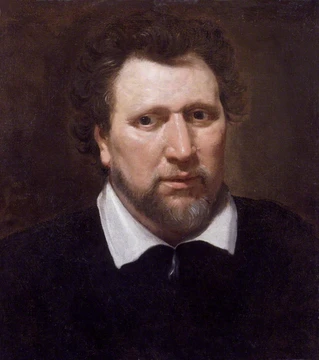
David Belasco
American theatrical producer who pioneered realistic stage lighting and naturalism.

David Belasco (July 25, 1853 – May 14, 1931) was an American theatrical producer, impresario, director, and playwright. He was the first writer to adapt the short story Madame Butterfly for the stage. Belasco launched the theatrical career of many actors, including James O'Neill, Mary Pickford, Lenore Ulric, and Barbara Stanwyck. He pioneered many innovative new forms of stage lighting and special effects in order to create realism and naturalism.
- born
- July 25, 1853, San Francisco, California
- died
- May 14, 1931, Manhattan, New York
- field
- Theatre (producer, director, playwright)
- nationality
- American
- known_for
- Adapting Madame Butterfly for the stage; pioneering modern stage lighting and na
Verified Timeline
Lore & Background
David Belasco was born in 1853 in San Francisco, California, the son of Abraham H. Belasco and Reyna Belasco, Sephardic Jews who had immigrated from London's Spanish and Portuguese Jewish community during the California gold rush. He began working as a youth in a San Francisco theater doing routine jobs such as call boy, script copier, or extra in small parts. From late 1873 to early 1874, he worked as an actor, director, and secretary at Piper's Opera House in Virginia City, Nevada, where he found 'more reckless women and desperadoes to the square foot…than anywhere else in the world.' Seeing 'people die under such peculiar circumstances' made him 'all the more particular in regard to the psychology of dying on the stage.' By March 1874 he was back in San Francisco, eventually managing Thomas Maguire's Baldwin Theater. When Maguire lost the theater in 1882, Belasco relocated to the East Coast. He went to New York City in 1882, working as stage manager for the Madison Square Theatre (starting with Young Mrs. Winthrop) and then the old Lyceum Theatre, while also writing original plays. By 1895, he was considered America's most distinguished playwright and producer. Over his career, stretching between 1884 and 1930, Belasco either wrote, directed, or produced more than 100 Broadway plays, including Hearts of Oak, The Heart of Maryland, and Du Barry. He helped establish careers for dozens of notable stage performers, including Leslie Carter, Ina Claire, Maude Adams, Jeanne Eagels, Lenore Ulric, David Warfield, and Barbara Stanwyck. He also worked with D. W. Griffith, Helen Hayes, Lillian Gish, Mary Pickford, and Cecil B. DeMille, whose later methods of handling actors, using dramatic lighting and directing films, were modeled after Belasco's staging techniques. Belasco was married to Cecilia Loverich for over fifty years; they had two daughters, Reina and Augusta. He died on May 14, 1931, at the age of 77 in Manhattan. His funeral was held at Central Synagogue, Manhattan, and he was interred in the Linden Hill Jewish Cemetery on Metropolitan Avenue in Ridgewood, Queens.
Reader's Guide
David Belasco's significance lies in his pioneering contributions to stage lighting and naturalism in American theatre. He demanded a natural acting style and developed stage settings with authentic lighting effects. He was one of the first directors to eschew the use of traditional footlights in favor of lights concealed below floor level, hidden from the audience. He used colored lights via motorized color changing wheels to evoke mood and setting. His production of Girl of the Golden West (1905) is remembered for a spectacular sunset that lasted five minutes before any dialogue started. Belasco's lighting assistant, Louis Hartmann, realized his design ideas. He also used 'follow spots' to further create realism and often tailored his lighting configurations to complement the complexions and hair color of the actors. He ordered a specially made 1000-watt lamp developed just for his own productions, and was the only director to have one for the first two years after its introduction (1914–1915). In his own theatres, the dressing rooms were equipped with lamps of several colors, allowing performers to see how their makeup looked under different lighting conditions. Belasco was said to put appropriate scents in the ventilation systems of the theaters, while his sets were highly detailed. In one play, an operational laundromat was built onstage. The Governor's Lady had a reproduction of a Childs Restaurant kitchen, where actors cooked and prepared food during the play. For The Easiest Way, he bought the entire interior of a dilapidated room from a theatrical boarding-house to achieve realism. His original scripts were often filled with long, specific descriptions of props and set dressings. Though initially less appreciated than European counterparts such as André Antoine and Constantin Stanislavski, he is now regarded as 'one of the first significant directorial figures in the history of the American theatre,' inspiring generations of theatre lighting designers.
Did You Know?
- Belasco was the first writer to adapt the short story Madame Butterfly for the stage.
- He ordered a specially made 1000-watt lamp and was the only director to have one for the first two years after its introduction (1914–1915).
- For the play The Easiest Way, Belasco bought the entire interior of a dilapidated room from a theatrical boarding-house to achieve realism.
- Belasco's production of Girl of the Golden West (1905) opened with a spectacular sunset that lasted five minutes before any dialogue started.
- He was a member of The Lambs from 1893 to 1931.
Frequently Asked Questions
Who is David Belasco?
He was an American theatrical figure who worked as a producer, director, and playwright from the late nineteenth century into the early twentieth. Born in San Francisco in 1853, he became one of the most recognizable names in American stage history before his death in Manhattan in 1931.
What is David Belasco most famous for?
He is widely credited as the first writer to adapt the short story Madame Butterfly into a stage production. He is equally renowned for revolutionizing how plays were lit and staged to achieve a more naturalistic, realistic look.
What role did David Belasco play in American theatre?
He functioned as a one-man creative engine—producing, directing, and writing his own shows—while also acting as a talent-launching pad for aspiring performers. His influence on American stagecraft made him one of the field's most pivotal figures.
Which actors got their start thanks to David Belasco?
His productions gave early career breaks to future stars such as Mary Pickford and Barbara Stanwyck, among numerous other performers who went on to dominate the stage and screen.
How did David Belasco change stage production?
He introduced innovative lighting techniques and special effects that pushed American theatre toward realism and naturalism. These innovations set new standards for how audiences experienced a live performance and influenced stage design for decades afterward.
More in Dramatists & Playwrights 1-21
Spotted an error? Know more?
This is a living reference — every entry is fact-audited, and reader corrections feed straight into our audit queue. Suggest an edit · See this site's audit record